
Catalonia: A public university system, globally engaged and socially committed
How far do Catalan Public Universities go?
Catalonia is the region of Spain with more public universities. The eight Catalan public universities (gathered in the Association of Catalan Public Universities, ACUP), form a high-quality, socially committed and globally oriented system that fosters international academic exchange and scientific collaboration at all levels. The Catalan university system is globally connected with almost all countries and higher education systems.
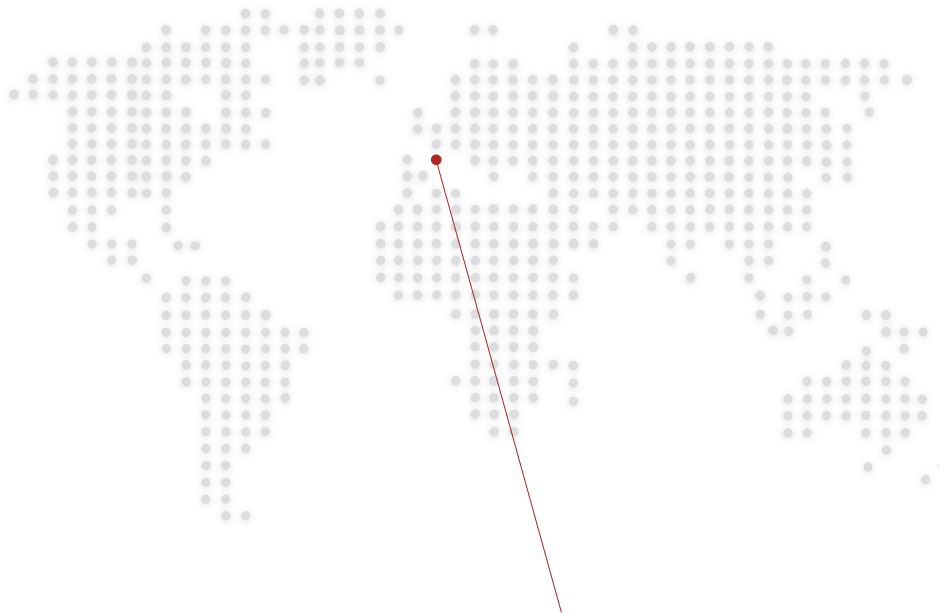
Catalonia (Spain)
Universitat de Barcelona
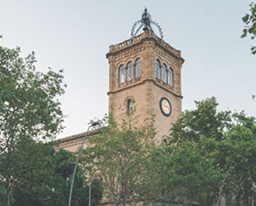
Located in Barcelona
48,635 Students
6,118 Staff and investigators
258 Research gropus

Universitat de Girona
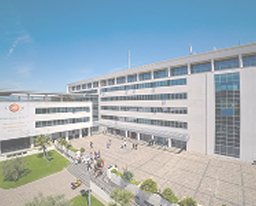
Located in Girona
14,508 Students
1,624 Staff and investigators
56 Research gropus
Universitat Autónoma
de Barcelona

Located in Barcelona
36,842 Students
4,124 Staff and investigators
185 Research gropus
Universitat
de Lleida
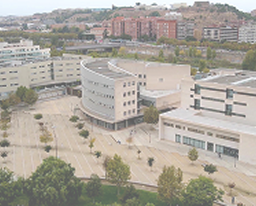
Located in Lleida
10,859 Students
1,529 Staff and investigators
51 Research gropus
Universitat Politècnica
de Catalunya
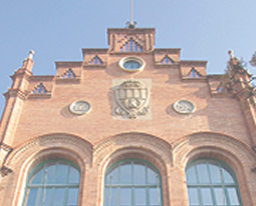
Located in Barcelona
30,527 Students
3,101 Staff and investigators
141 Research gropus
Universitat
Rovira i Virgili
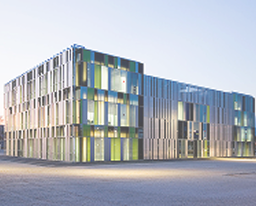
Located in Tarragona
16,040 Students
2,243 Staff and investigators
88 Research gropus
Universitat Pompeu
Fabra

Located in Barcelona
19,288 Students
1,519 Staff and investigators
61 Research gropus
Universitat Oberta de
Catalunya

Online
72,597 Students
414 Staff and investigators
33 Research gropus
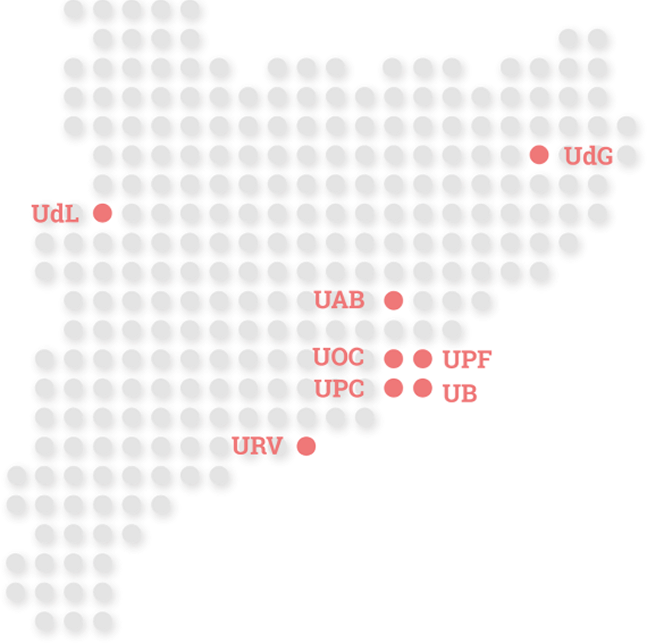
The collective voice of Catalonia’s public universities to foster joint efforts that improve the Catalan university system at local and international level
INDICATORS
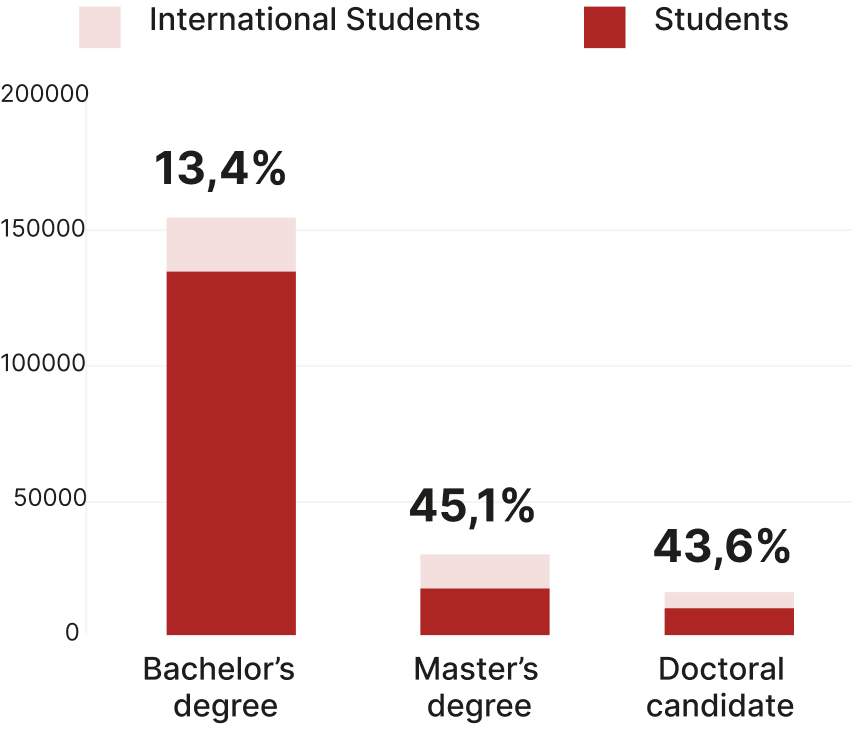
The 8 Catalan public universities promote international academic exchange across all levels. With more than 40,000 international students and over 2,500 faculty and staff involved yearly, our institutions connect globally through 150+ bilateral agreements.
2023-2024
Catalan Public
University System
+250.000 students
11% are international students
+20.500 Academic staff
7% are international academic staff
+12.000 students are classified
as income mobility students
International
Research Funding
265M €
through the H2020
framework programme
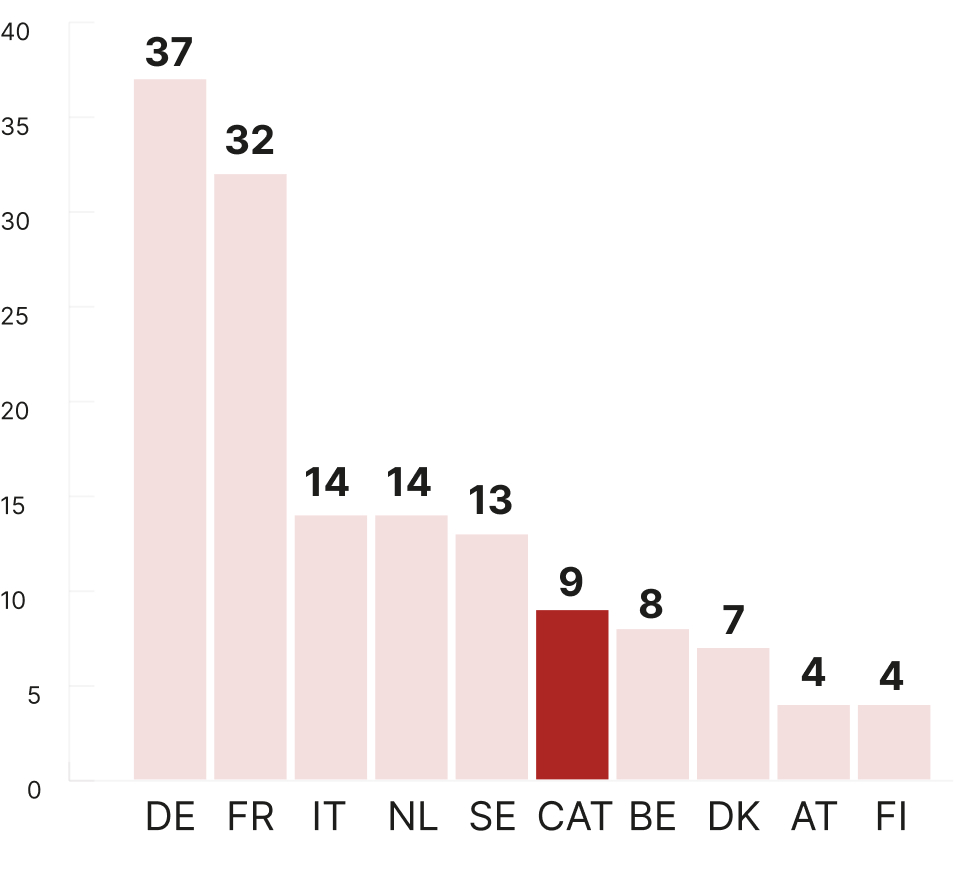
Catalonia stands in 6th position in Europe among countries awarded with European Research Council (ERC) grants on of the most distinguished and competitive EU funding schemes.
Year: 2023
DE: Germany / FR: France / IT: Italy / NL: Netherlands / SE: Sweden
GLOBAL ALLIANCES
Catalan Public Universities are integrated into eight different European university alliances and are part of a the UNESCO Network Global University Network for innovation (GUNi)
CHARM-EU
UB (Universitat de Barcelona)
Unite!
UPCB (Universitat Politècnica de Catalunya)
Across
UdG (Universitat de Girona)
Open EU
UOC (Universitat Oberta de Catalunya)
ECIU
UAB (Universitat Autònoma de Barcelona)
EUTOPIA
UPF (Universitat Pompeu Fabra)
Aurora
URV (Universitat Rovira i Virgili)
SUSTAIN-LIFEU
UdL (Universitatde Lleida)